
How I built websites before Claude, and what changed
Before Claude Fable, I built websites in WordPress with Elementor. Here are four of them, shown with their owners' permission. I built them between 2022 and 2024, and I wrote the copy on each one.
I feel good about all four. Each client got what they came for, and each got a strong site for the budget. They are also a fair picture of what a careful designer could deliver with the tools of the time. That is why they are worth a look.
Azim Khamisa, 2024
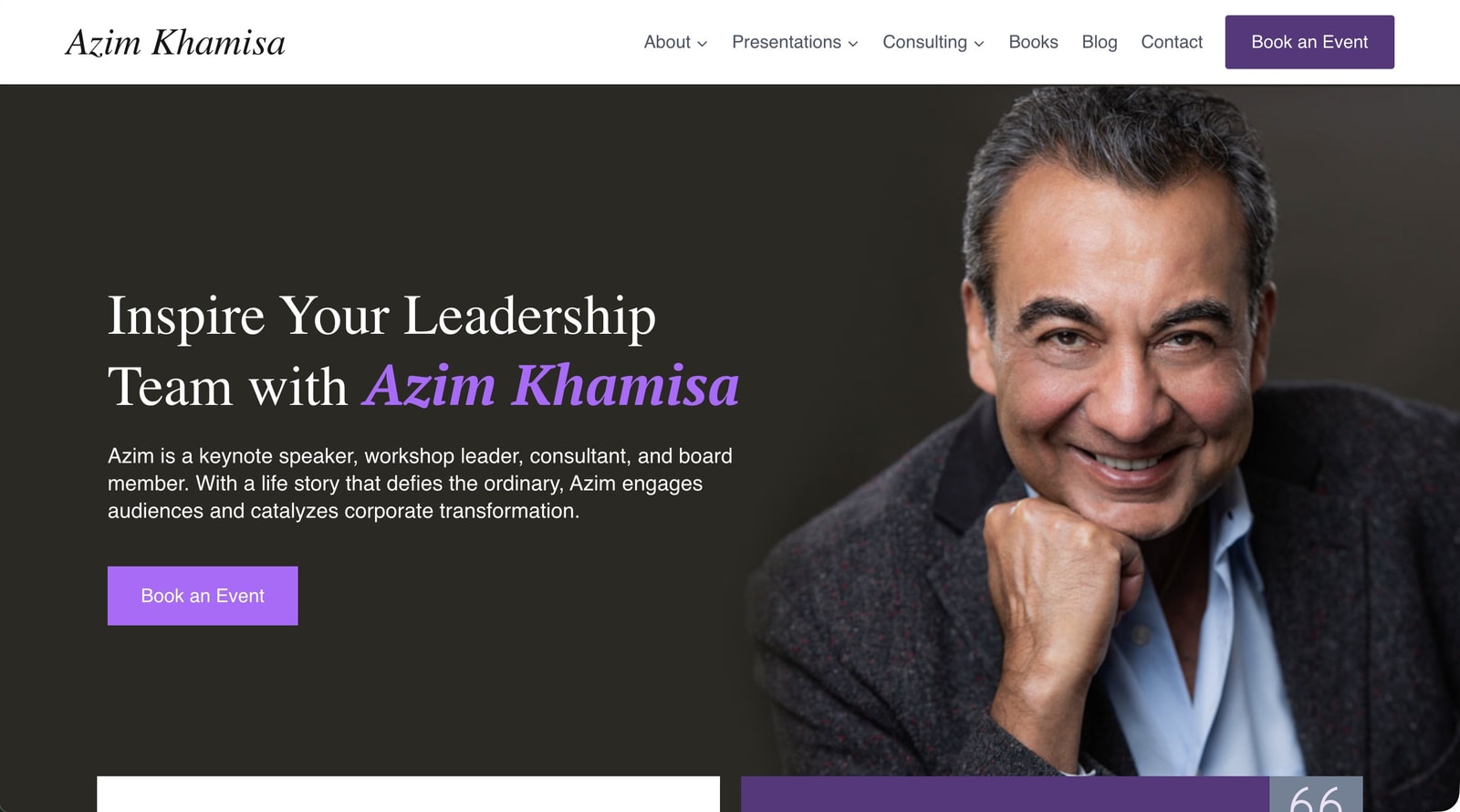
I met Azim on LinkedIn, respected the work he was doing, and offered to build his site. I had good portraits to work with and some wonderful testimonials. The hard part was strategy. Azim was known for one keynote, the story of forgiveness that made his name. He wanted to open up topics that companies are booking now. Positioning those newer talks, and leading with them, was mine to think through.
Shera Sever, 2023
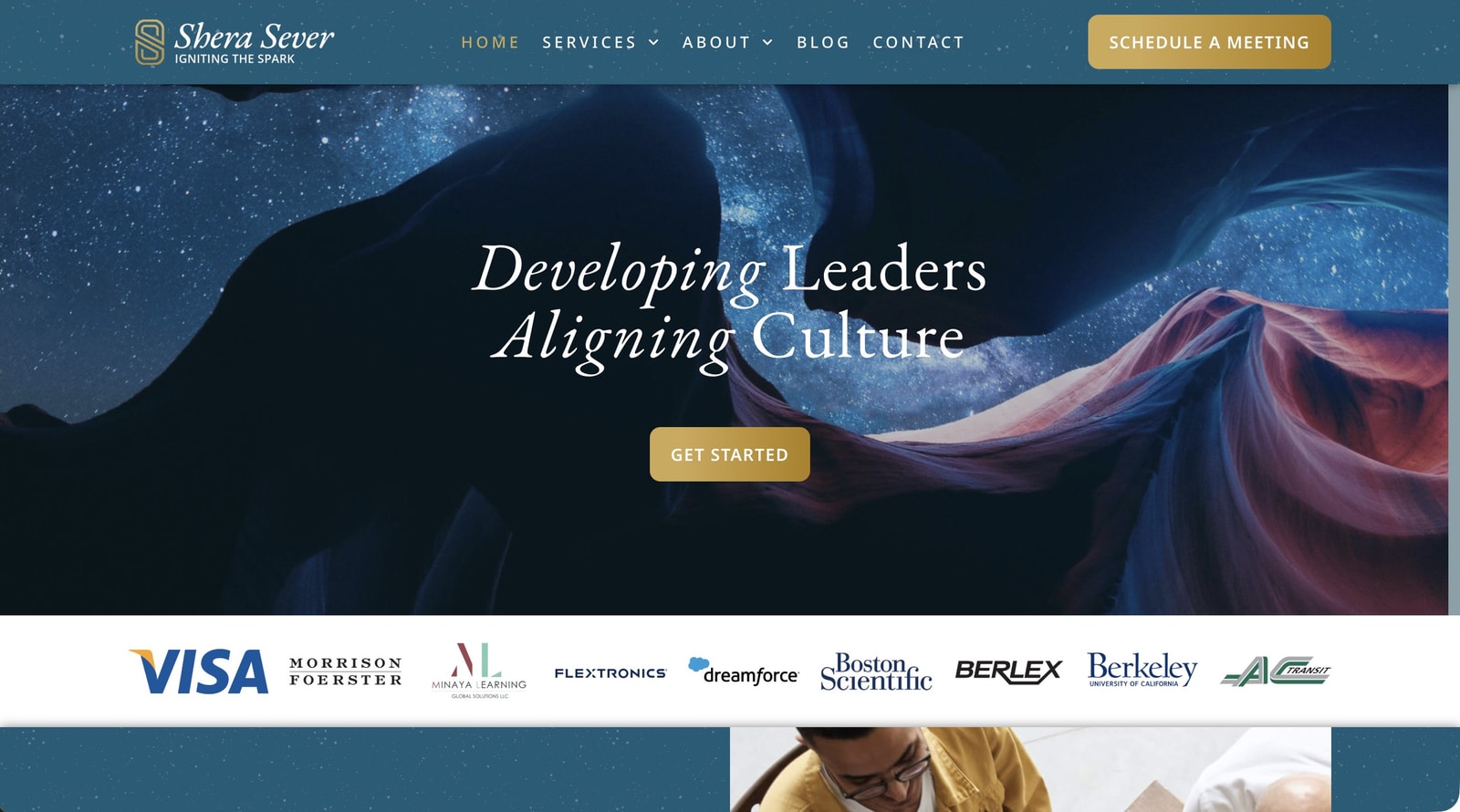
Shera had specific ideas about what she wanted to say. My job was to give that material a structure a visitor could follow.
PASS, 2022

The owner of PASS knew exactly what he wanted to offer on each page. My work there was a clean layout that let his offer carry the page.
Learn2Franchise, 2024

Matt Frentheway wanted leads. I built several ways in, and the one that did the most work was a quiz. It asks a few questions about the business a visitor pictures owning. Then it gives a response and introduces Matt as the person who can help if a franchise fits.
How a site got made
The decisions ran in an order. What is the overall offer? What is the strategy for making that offer? What should the brand look like, and what should it feel like? Usually the answer was elegant. Sometimes a person wanted more personality. Azim and Shera both have warm, colorful ones, so neither got a corporate palette. Learn2Franchise and PASS were more traditional businesses, and blue and white made sense for them.
Then the build went section by section, and I did my best to fulfill that vision by feel. Time set the limit. You get one good draft, then a round of polish, and most sites happen in those two phases.
By feel is the problem. Give the same designer the same brief on three different days and you will get three different sites. Each is defensible, and they cannot all be right.
What changed
The first change is iteration. Say I want to adjust the hero layout across all 12 pages of a site. In Elementor that could take me an hour. With Claude Fable it takes five minutes. When one change is six times faster, a project gets an order of magnitude more refinement. I keep going where I used to stop.
The second change is strategy, and it matters more. I can give Claude Fable what the client told me on the phone. What they want the brand to look like. What they want from a business standpoint. Their ultimate goal. It comes back with recommendations. It will tell me when a palette the client loves will not reach the customer they are trying to win. I can bring that to the client with the reasoning attached. People who are committed to their goal usually align with a recommendation once they see how it gets them there. Nothing on the site is arbitrary anymore. Each choice traces to the customer, the offer, the position in the industry, and the competitors.
If you do the work in the right order, there is a right answer to almost every design question. Claude Fable can examine the possibilities and hold the whole intent of the site in view. It can run more iterations than a project without it could afford. That is how I arrive at the right answer now. The depth of what I give it sets the ceiling, and a thin brief produces work that looks thin.
The technical part
Strategy comes first, design second, and technical third. Third still matters. WordPress worked, and those four sites are functional today. What Claude Fable produces for my clients now is a hand-coded HTML site. That is a different class of product. It loads almost at once on a phone. It fits the screen it is on. A visitor feels that speed, and Google measures it. So it helps the site rank in search and in chatbots. There is no plugin stack underneath, so there is nothing to maintain. The build takes 12 working hours instead of 40.
The first site I built this way was BioPeak, Christine Hansen's functional medicine and longevity practice in Sun Valley, in 2026. Set it beside the four above. One door in, the practitioner on the page, her patients' words as the proof, and nothing underneath to maintain.
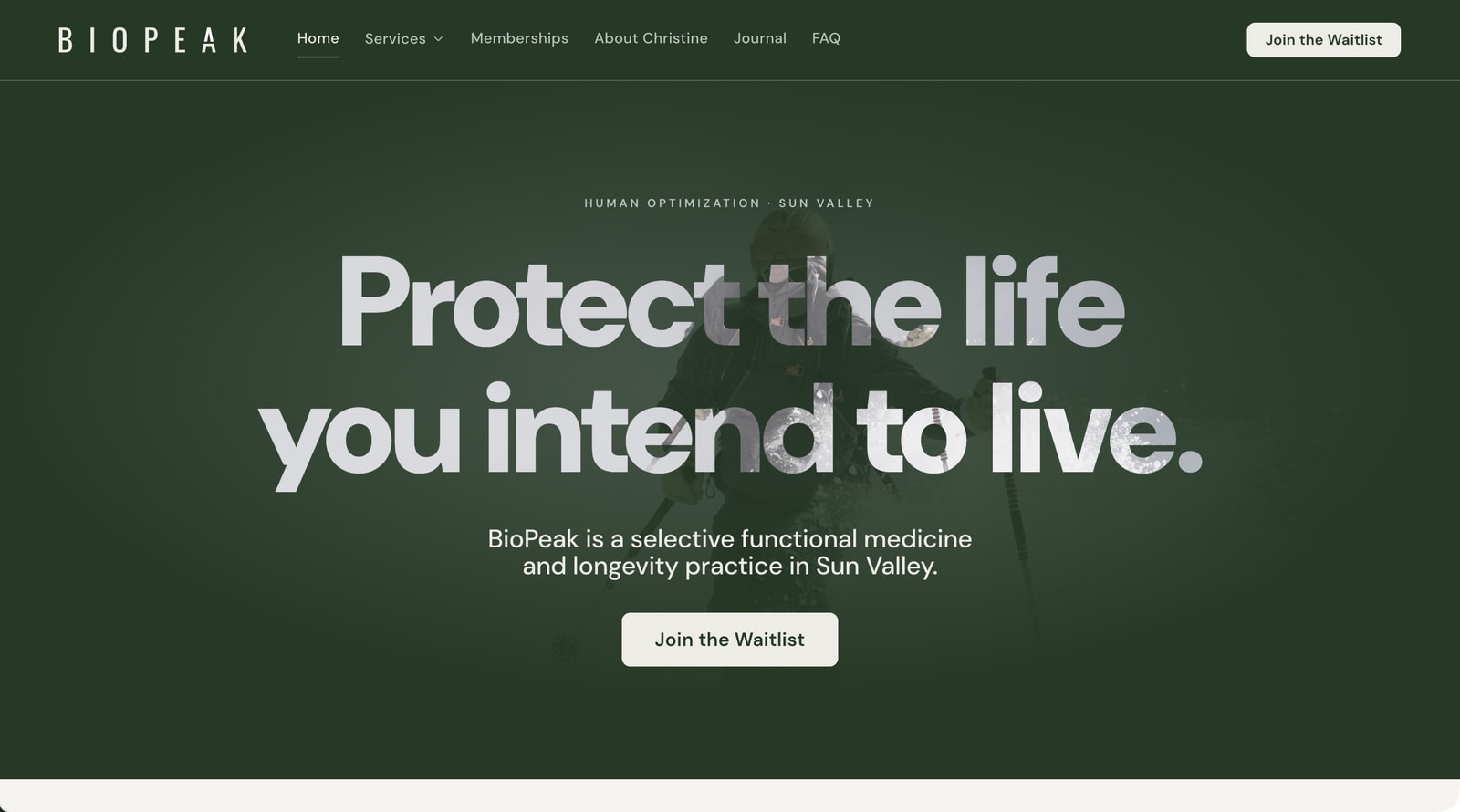
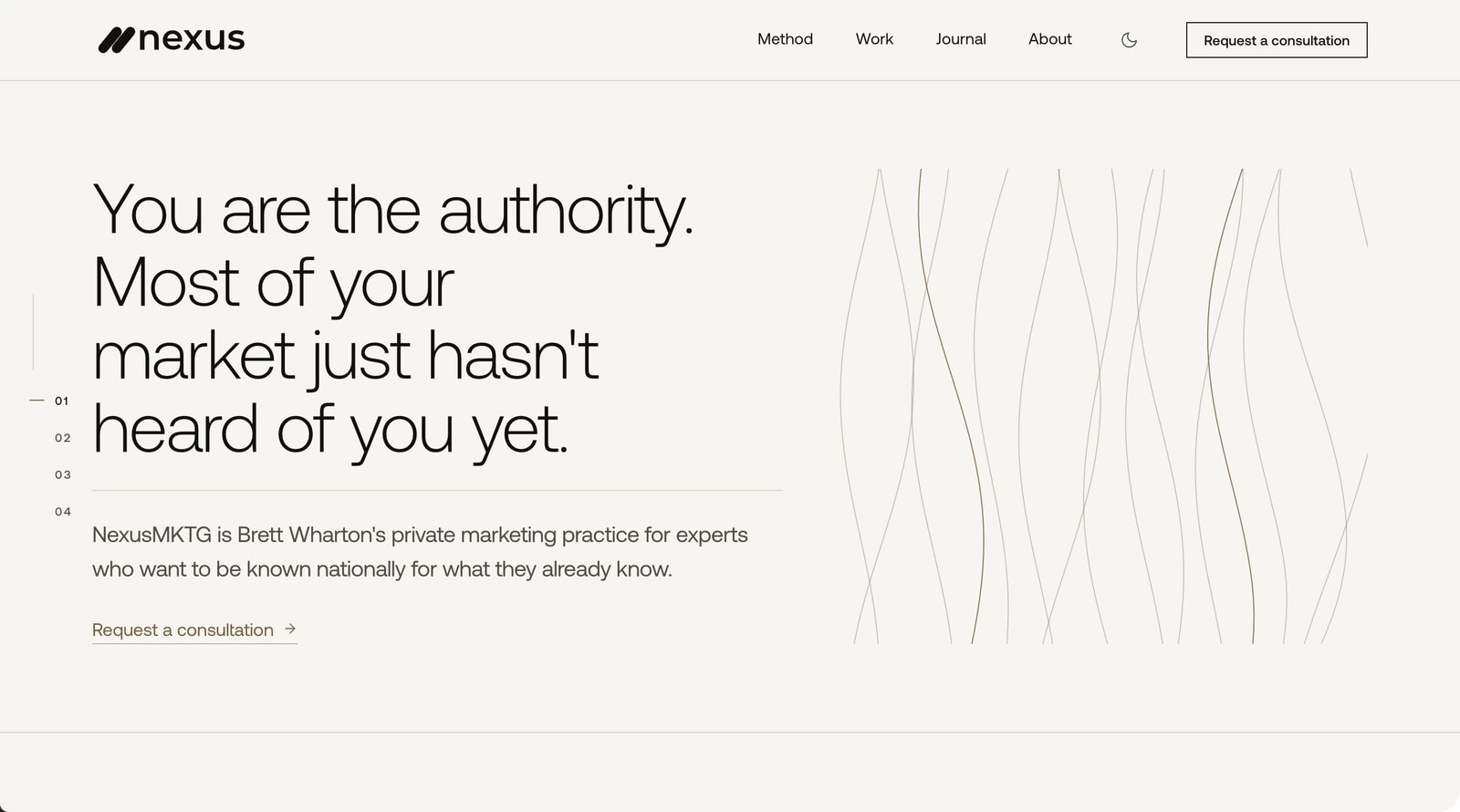
That is the kind of site I used to see only from design agencies charging $50,000 and up. A $50,000 site was out of reach for a client with a $10,000 budget. Now I can build one, and I love that.